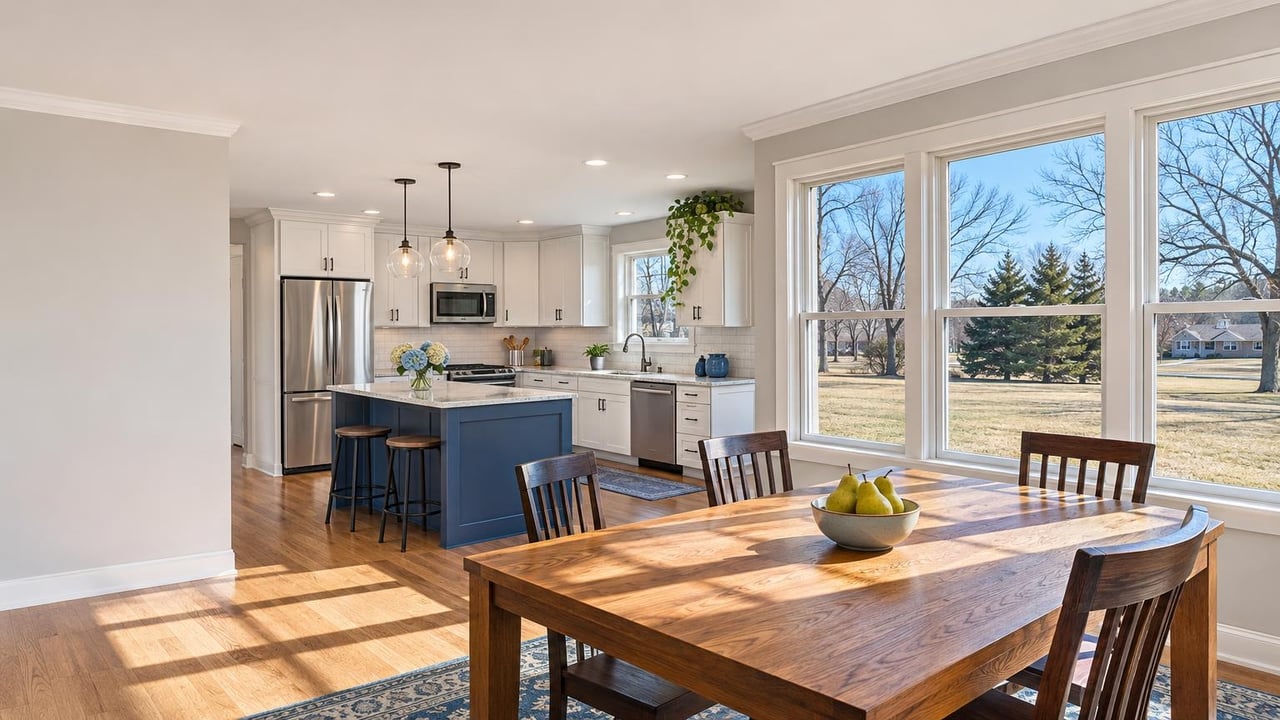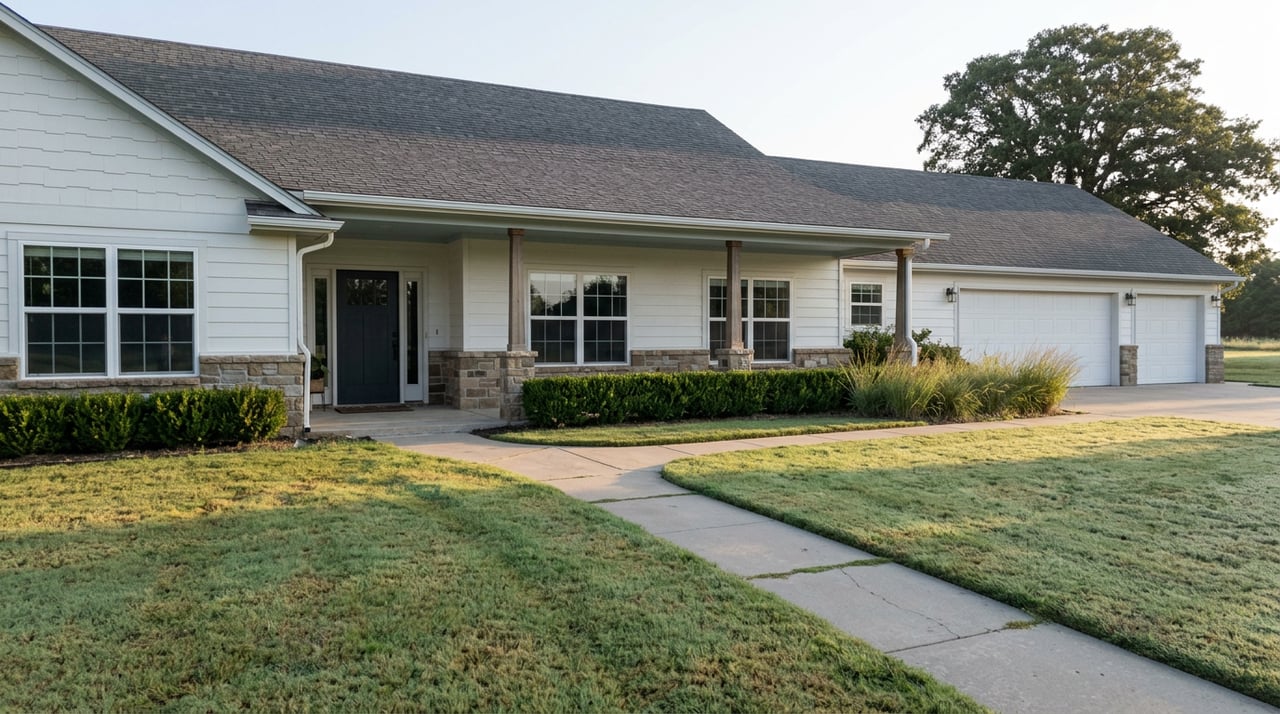
Picture two listings in Meriden. Same school district, same rural feel, same K-4 Highway corridor within a few miles of each other. One sits on a quarter-acre lot on Prairie Bend Drive, built in the early 2000s. The other sits on several acres off Y Road, built decades earlier. On paper, the only real difference is size and age. In practice, one of those homes might come with a water bill from a system headquartered a few blocks away, while the other pulls from a private well or a rural water district that crosses into the next county over. That difference, not always identified on a listing sheet, can affect your monthly cost and financing options alongside square footage.
This is a detail worth checking beyond the portal filters. It's a boundary line running underground.
The Fee to Check Before an Offer
Buyers comparing homes in and around Meriden are used to scanning for price, acreage, and bedroom count. What they aren't used to checking is which rural water district actually serves the parcel, because that detail rarely shows up until much later in a transaction. One recent area listing spelled it out plainly: a water meter install through a neighboring rural water district was quoted at $3,010, current as of January 2026. That's not a hookup fee buried in a homeowners association document. It's a real cost tied to which side of a property line you're standing on, and it can catch a buyer off guard if nobody raises it before the offer stage.
The reason this fee exists at all, and varies parcel to parcel, comes down to how water service is organized across Jefferson County. It isn't one system. It's several, stitched together.
Eleven Water Districts, One Zip Code
Jefferson County is served by a long list of separate rural water districts, each with its own board, its own rate structure, and its own service boundary. The Kansas Rural Water Association's county map lists Jefferson RWDs 1, 2, 3, 7, 8, 9, 10, 11, 12, 13, and 15 as active systems in the county. RWD 12 and RWD 13 don't even stay inside Jefferson County lines. RWD 13 covers territory across Jefferson, Douglas, and Leavenworth counties, and RWD 12 shows up on both the Jefferson and Leavenworth county system maps.
Jefferson County Rural Water District No. 1 is headquartered right in Meriden, at 112 Main St. That proximity might suggest that anything with a Meriden address is covered by the same system. It isn't. A property a half-mile away could sit inside a different district's boundary entirely, with a different rate schedule and a different answer on whether a new meter is even available.
For a buyer, this means the question "does this house have city water" is the wrong question in Meriden. The right question is "which district, and what does that district charge." Those answers only come from checking the parcel against Jefferson County's water district records, not from anything printed on a flyer.
USDA Financing Eligibility
Water service is one factor to check. Financing eligibility is another, and it may affect the options available to a buyer.
Jefferson County appears on the list of Kansas counties eligible for USDA Rural Development's Section 502 Guaranteed Loan program. That program finances up to 100 percent of a home's appraised value, meaning no down payment, for buyers who meet the area's income limits and whose property falls inside USDA's eligible map. For the 2026 program year, moderate income limits sit at roughly $122,800 for a household of one to four people and $162,100 for a household of five to eight, figures drawn from USDA's FY2026 Rural Development income tables.
That's a meaningful detail for anyone assuming a rural Jefferson County purchase requires a large down payment the way a conventional loan might. It also means eligibility isn't guaranteed just because a property sits in Meriden. USDA determines it address by address, so the map has to be checked for the specific parcel, not just the town name. A buyer who skips that step might rule out zero-down financing on a home that actually qualifies, or assume it qualifies when it doesn't.
Put the two layers together and the picture sharpens. The water district affects a property's ongoing water costs. USDA eligibility may affect financing options. Neither shows up in a listing's price per square foot.
Two Very Different Meridens
Differences in property type and infrastructure help explain why sold prices around Meriden swing as widely as they do. A home on Prairie Bend Drive, in the small platted subdivision built mostly between 1999 and 2006 on lots averaging around a third of an acre, is a different product than a home on Y Road or 43rd Street sitting on several acres with an older build year. Recent closings bear this out. A three-bedroom home on East Main Street, built in 1979 on a small in-town lot, closed in the $180,000 range in 2026. A five-bedroom home on Y Road, built in 1960 on acreage, sold for roughly $580,000 in August 2025 after just six days on market. A smaller home on 43rd Street closed near $299,000 in June 2026.
| Property type | Typical lot | Typical build era | Likely water source |
|---|---|---|---|
| In-town platted lots (Prairie Bend Dr/Ct) | Around 0.3 acre | Late 1990s to mid-2000s | RWD or municipal connection |
| Acreage parcels (K-4 Hwy, Y Road, similar) | Several acres and up | 1960s to 1970s common, mixed with newer builds | Private well or a specific RWD, varies by parcel |
These aren't two price tiers of the same market. They're two different infrastructure setups wearing the same town name. That's also part of why days on market data for Meriden reads so unevenly. One portal showed a median of 376 days on market as of March 2026, while individual closings in the same window ranged from under a week to well over a month. A wide spread like that usually means the properties changing hands aren't comparable to each other, and in Meriden's case, the water and financing layer is a real part of why.
Questions to Ask Before You Write an Offer
None of this needs to slow a buyer down. It just needs to happen earlier than most people think to ask it.
- Which rural water district, if any, serves this exact parcel, and what does that district's current rate schedule look like.
- If the home is on a private well, when was it last tested and does the seller have records.
- Does this specific address clear USDA's rural property eligibility map, not just the town in general.
- If USDA financing is on the table, does household income fall under the current guaranteed loan limits for a household of this size.
- Is there a water meter or tap fee involved in taking over service, and has that number been confirmed with the district office rather than assumed.
A buyer who asks these five questions before writing an offer can better assess a Meriden property's costs and financing options.
A Local Team That Knows Where the Lines Actually Run
When comparing listings in Meriden, price is one consideration; water service and financing eligibility can also affect a property's costs and available financing. The Geis Group works Jefferson County and the surrounding communities regularly, which means checking water district boundaries and USDA eligibility before a client ever falls for a listing price. If you're weighing a move to Meriden and want someone to walk the parcel-specific details with you, reach out to Megan and Matthew Geis and get a clear read on what a property will actually cost to own before you write the offer.
This article is general information, not legal, tax or financial advice. Consult a qualified professional about your situation.